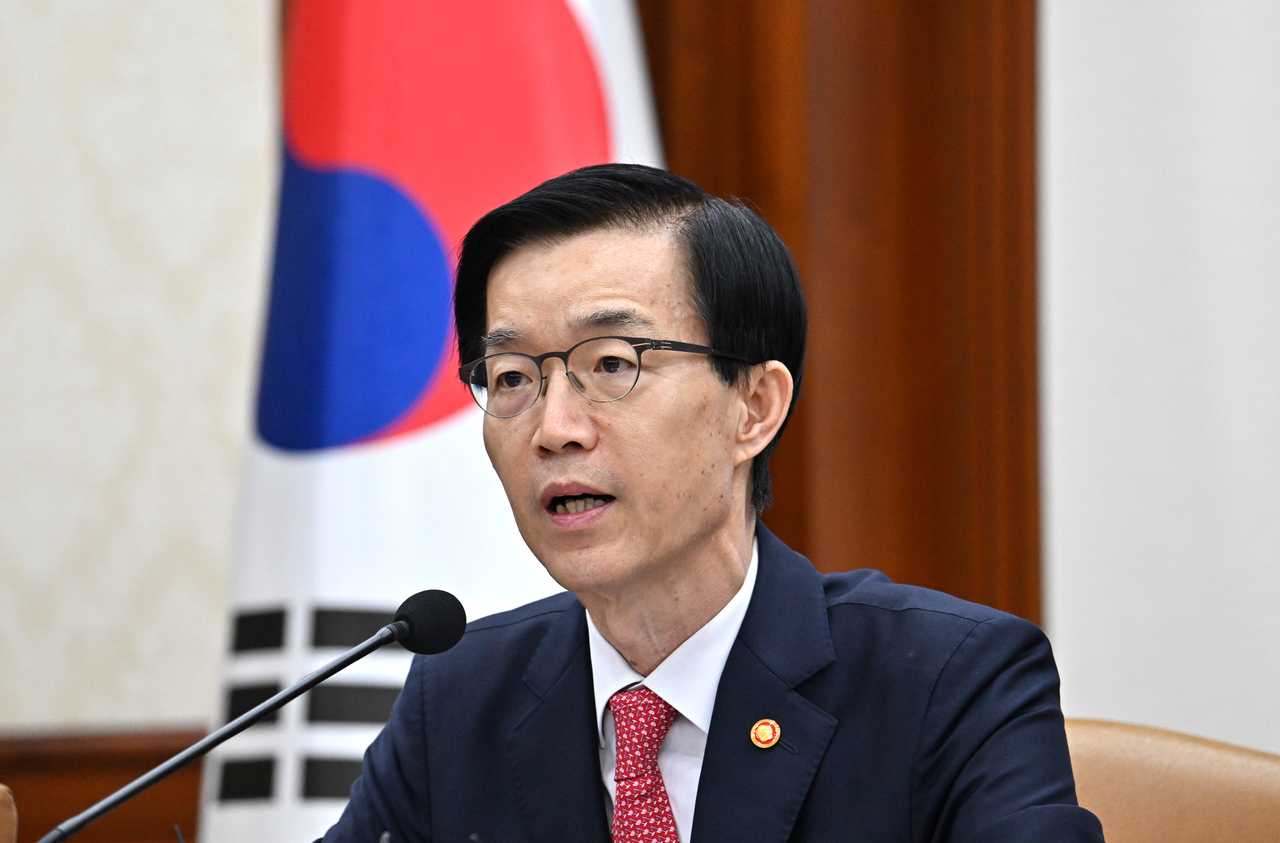
South Korea's interim government has decided to dispatch former Industry Minister Bang Moon-kyu as the new ambassador to Indonesia, despite controversy over his special appointment by now-suspended President Yoon Suk Yeol, according to government sources.
In contrast, Kim Dae-ki, a close confidant to Yoon and a specially appointed ambassador to China, will not be sent under the acting president system. This is despite the South Korean Embassy in Beijing having functioned with an acting ambassador since late January.
Bang, a non-career diplomat, and Kim, formerly chief of staff for Yoon, were both nominated as specially appointed ambassadors in October 2024 by Yoon.
Bang will be included in the next tranche of ambassadorial appointments early next month, with an announcement forthcoming, according to a government source who wished to remain anonymous.
Bang has recently received his formal acceptance from the Indonesian government, the source added. His appointment would need to be endorsed by the Korean Cabinet before the acting president grants a letter of credence to Bang.
The South Korean ambassadorial post to Indonesia has been empty for around seven months, dating to July 2024.
If Bang is not sent soon, the position could remain vacant for much longer, as South Korea faces the possibility of an early presidential election. A presidential election must be conducted within 60 days if the Constitutional Court upholds Yoon's impeachment, which is widely anticipated in mid-March.
Another government source pointed out that Bang's case stands out in comparison to Kim's, considering his extensive experience as a government official in diverse fields.
Prior to his tenure as minister of trade, industry, and energy, Bang served as vice minister of health and welfare, president of the Export-Import Bank of Korea, and minister for government policy coordination. His experience encompassed a range of ministries, from the Ministry of Agriculture, Food and Rural Affairs to the Ministry of Economy and Finance.
The unprecedented appointment by Seoul of a minister-level official as ambassador has largely been interpreted as a manifestation of the growing strategic importance of its ties with Indonesia.
Indonesia has been strengthening its cooperation with South Korea in the defense sector, particularly through the joint development of the KF-21 supersonic fighter jet. Indonesia is also South Korea's largest trading partner in the 10-member Association of Southeast Asian Nations (ASEAN).
South Korea has a system in which a president can assign "specially appointed" ambassadors.
The system allows a president to appoint an outsider to head a foreign mission if they possess the requisite qualifications and aptitude to be a diplomat. This means that ambassadors or consuls general can be named even if they have already retired from the Foreign Ministry or lack diplomatic experience.
Yet since such appointments have typically been at the political discretion of a Korean president, the system has long been criticized for its fairness, potential for manipulation and as a means of political patronage — rewarding individuals who have been loyal to a president.
dagyumji@heraldcorp.com