'Korea's ASML' HPSP’s exclusive chip tech puts it at center of M&A frenzy
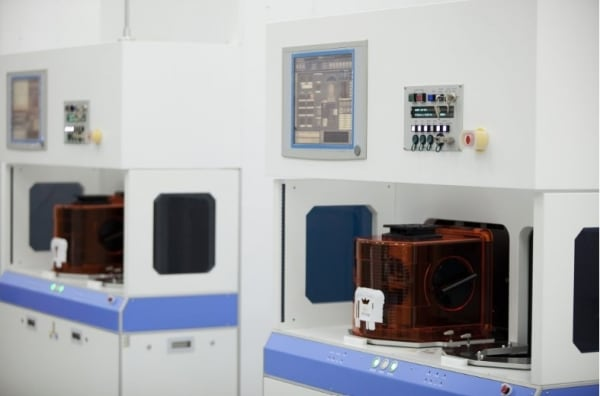
South Korean semiconductor equipment maker HPSP has emerged as a key player in the M&A scene, attracting top-tier private equity giants including Carlyle Group, Blackstone and MBK Partners. The company’s exclusive technology in the advanced chip market has made it a highly sought-after asset.
Often referred to as "Korea’s ASML," HPSP dominates the market for high-pressure hydrogen annealing equipment, securing major global chipmakers such as Samsung Electronics, TSMC and Intel as clients — similar to how Dutch firm ASML dominates the lithography equipment sector.
Global PE giants eye stake
Thanks to its exclusive technology and lucrative business model, HPSP attracted five leading PE firms — KKR, Blackstone, Carlyle Group, Bain Capital and MBK Partners — in its preliminary bidding round earlier this month for the 40.9 percent controlling stake held by Crescendo Equity Partners.
Since Crescendo acquired a 51 percent stake in 2017, HPSP’s revenue has skyrocketed, surging from 24 billion won in 2018 to 1.59 trillion won in 2022, following its Kosdaq listing. In 2023, the company posted revenue of 1.79 trillion won and an operating profit of 95.2 billion won, achieving an impressive 53 percent operating margin.
Despite strong investor interest, concerns remain over HPSP’s high asking price and whether its technological advantage can be sustained long-term. Crescendo is reportedly seeking a sale price of around 2 trillion won, adding a significant premium — even though HPSP’s current market capitalization stands at approximately 2.6 trillion won.
"HPSP's technological strengths, its client portfolio, its potential for growth and global expansion will be the key factors to determine the value of the company," an industry official said, adding that the surging demand for high bandwidth memory chips — the critical component in AI processors — will spur its growth.
Unrivaled technology
HPSP’s high-pressure hydrogen annealing equipment is critical to the production of advanced semiconductors ― an industry experiencing soaring demand amid the AI boom.
During chip production, annealing — a heat treatment process — neutralizes defects and enhances ductility before transistors are assembled into semiconductor chips.
Traditionally, annealing machines used heat or oxygen, but as chips shrink to 2-3 nanometers, the heat generated in conventional annealing can damage ultra-fine chip materials, which are more heat-resistant in larger chips.
To solve this issue, HPSP pioneered a method using high-pressure hydrogen gas, which lowers annealing temperatures from over 600 degrees Celsius to below 450 C, ensuring greater defect removal without material damage. However, the technology is extremely difficult to commercialize due to the high risk of hydrogen explosions.
"HPSP’s market dominance will continue through at least 2026," Samsung Securities noted in a November 2024 report, highlighting that demand for its technology spans the entire semiconductor market, including memory chips, logic chips and foundries.
Korea Investment & Securities also forecast that HPSP would maintain its market leadership for at least five years, citing the complex regulatory approval process for new competitors in handling hydrogen-based semiconductor technology.
High price tag
Despite HPSP’s technological edge, several hurdles remain in closing the M&A deal, according to industry insiders.
"The biggest challenge will be addressing concerns that the company’s stock price is inflated relative to its actual value," an industry official stated.
Since HPSP is publicly traded, its market capitalization fluctuates with stock prices, making price negotiations difficult for potential buyers.
Without additional premiums, Crescendo’s stake is valued at approximately 1 trillion won, yet the private equity firm is seeking a 100 percent premium in the deal.
Additionally, the complexity of HPSP’s semiconductor technology presents a challenge for investment firms, which would need to scale the business before reselling it at a profit.
"The industry is too technical for a private equity firm to fully grasp," a PE firm executive reportedly said to a local media outlet, signaling their withdrawal from the bidding process.
Crescendo aims to begin the main bidding process in the first half of this year and complete the deal before the end of this year.
herim@heraldcorp.com