China acknowledges S. Korea’s hopes for Xi’s visit, but Dai sidesteps direct answer
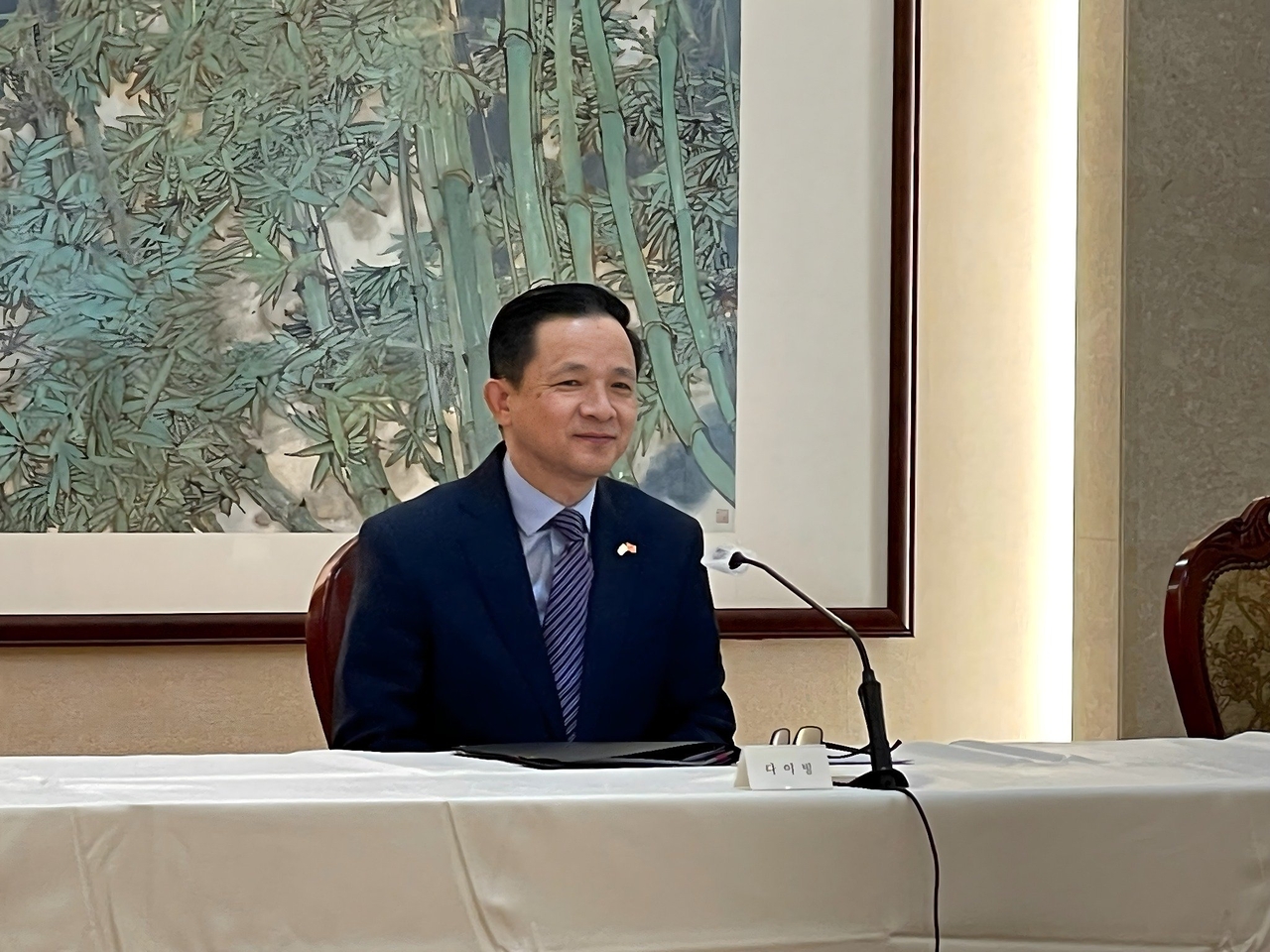
Chinese Ambassador to South Korea Dai Bing sounded the alarm over a small but “destructive” anti-China faction that is fueling election interference claims and leading protests, warning that their actions could “seriously harm” China-Korea relations.
Dai raised concerns about the diplomatic fallout at a critical juncture, as Seoul-Beijing ties have been on an upward trajectory since the latter half of 2024, driven by high-level exchanges, after hitting rock bottom.
Anti-China protests and accusations of Chinese meddling in South Korea’s elections have gained traction following President Yoon Suk Yeol’s impeachment by the National Assembly over his contentious Dec. 3 martial law declaration.
"I also recognize that these individuals represent only a small minority in Korean society and do not reflect broader public opinion," Dai said during his first meeting with reporters in Seoul on Tuesday. "However, this extremely small minority force has strong destructive power and could cause serious harm to the development of China-South Korea relations."
During the roundtable, which lasted around 3 1/3 hours, Dai highlighted the repercussions of protests and accusations against China, emphasizing their impact on how South Korea is viewed by the Chinese public. Dai pointed out that "the current level of public sentiment between China and South Korea remains relatively low."
Dai explained that protests held in areas with a high concentration of Chinese tourists made a very negative impression on many Chinese visitors. A series of anti-China protests have been taking place in Myeongdong, where the Chinese Embassy is located, and a popular tourist spot for Chinese visitors.
“Such smear campaigns against China, on the one hand, reinforce a negative perception of China among Korean citizens,” Dai said. “At the same time, it strengthens the negative perception of Korea among Chinese citizens, which runs counter to our mutual efforts to promote China-Korea relations and is contrary to our goals of improving relations in a positive direction.”
If anti-China protests intensify
Dai explained why he departed from the Chinese Embassy in Seoul’s usual practice of maintaining a "low profile" and remaining "low-key" in response to such allegations and anti-China protests.
"The reason we are now expressing concern is that anti-China protests are continuously increasing," he said.
When asked about his view of the reasons behind the intensification of anti-China protests, Dai responded, “As a diplomat, I can see very clearly that some people are using the 'China card' to serve their own interests. I believe that the majority of Koreans can also see this clearly." However, Dai did not single out any names or entities.
Dai also raised the issue of a Yoon supporter, who was dressed as Marvel's Captain America, being arrested on Feb. 14 for attempting to break into the Chinese Embassy. Dai denounced the act as a "malicious diplomatic incident."
Dai stressed that China would take "appropriate measures" if anti-China protests spill over into a diplomatic issue, crossing the threshold of internal affairs, such as “unfounded claims specifically targeting China” or "attempts to break into the Chinese Embassy."
"We remain committed to non-interference in South Korea’s internal affairs, but we will also take appropriate measures depending on the severity of the situation," Dai said. "But if the situation develops to the point of affecting China’s major interests, we will also express our position in an appropriate way."
Xi’s possible visit
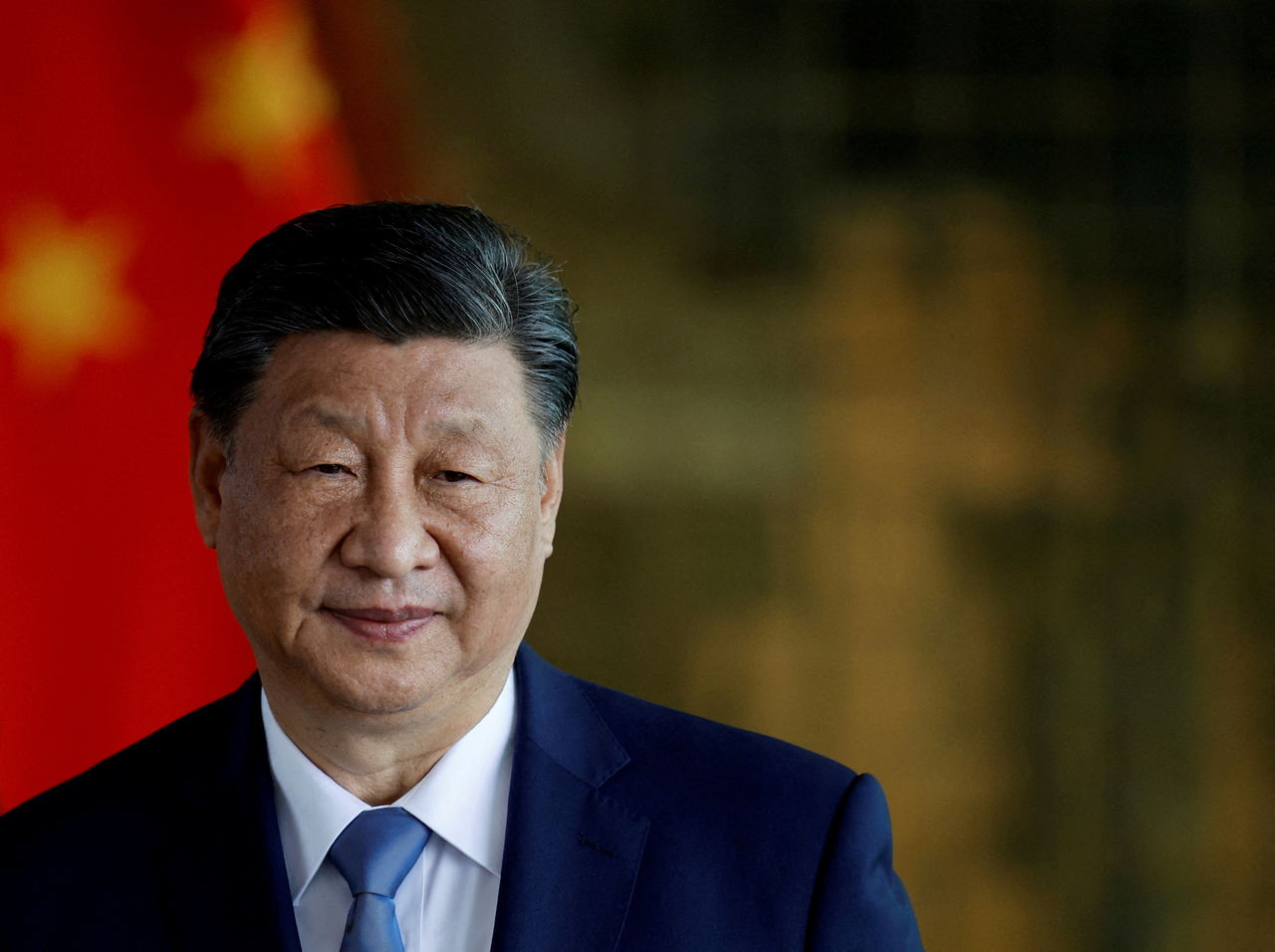
Dai touched upon the prospect of a visit to South Korea by Chinese President Xi Jinping on the occasion of the Asia-Pacific Economic Cooperation summit South Korea will host from late October to early November. It would be Xi's first in 11 years and the first since 2014, if he were to visit.
Dai noted that both sides “have reached an important consensus on mutually supporting the successful hosting of the summit,” with China set to take the helm in 2026.
“As an ambassador, I also believe that high-level diplomacy has an irreplaceable role in the development of relations between our two countries,” he said when asked by The Korea Herald about the prospect of a Xi visit. “But we also need to create a favorable atmosphere to foster the right conditions for high-level diplomacy."
While stopping short of a definitive answer, Dai said, “What I can say is that I am ready to work closely with the Korean side.”
But he also dropped a possible hint about a Xi visit, saying Gyeongju was the first city outside of Seoul that he visited after taking on his role in South Korea. Gyeongju, North Gyeongsang Province, is the host city of this year’s APEC summit.
Dai denies cultural ban
Addressing concerns over China's ban on Korean content following South Korea's 2016 deployment of the US THAAD missile battery, Dai dismissed the existence of any such restrictions — a stance Beijing has consistently maintained.
Dai stressed that China-Korea cultural exchanges are shaped by a range of complex factors, encompassing public sentiment between South Korea and China, which he said remains relatively low.
“This requires joint efforts from both sides to make positive decisions,” Dai said, emphasizing that stronger bilateral ties and public goodwill must come before cultural exchanges.
From Korea’s perspective, Dai noted, greater access for Korean celebrities in China could have a positive impact.
"However, from China’s perspective, we also need to consider what kind of feelings Chinese audiences will have, especially given the current situation where ... there are still some anti-China protests," Dai said. "Therefore, China-Korea cultural exchanges should be viewed in the context of improving China-Korea relations and the continuous strengthening of the China-Korea friendship."
When asked by The Korea Herald about a primary goal he seeks to achieve during his tenure, Dai expressed his desire to promote the development of China-Korea relations toward a "healthy, stable and positive, upward direction."
“Stable and healthy development means that China-Korea relations will no longer experience ups and downs or setbacks,” Dai said. "Positive and upward development means there is no ceiling, and the potential for cooperation between both sides is limitless."
dagyumji@heraldcorp.com