South Korea will work to seek removal from the US Department of Energy's list of "sensitive" countries and expand bilateral energy cooperation, Seoul's industry minister said Thursday.
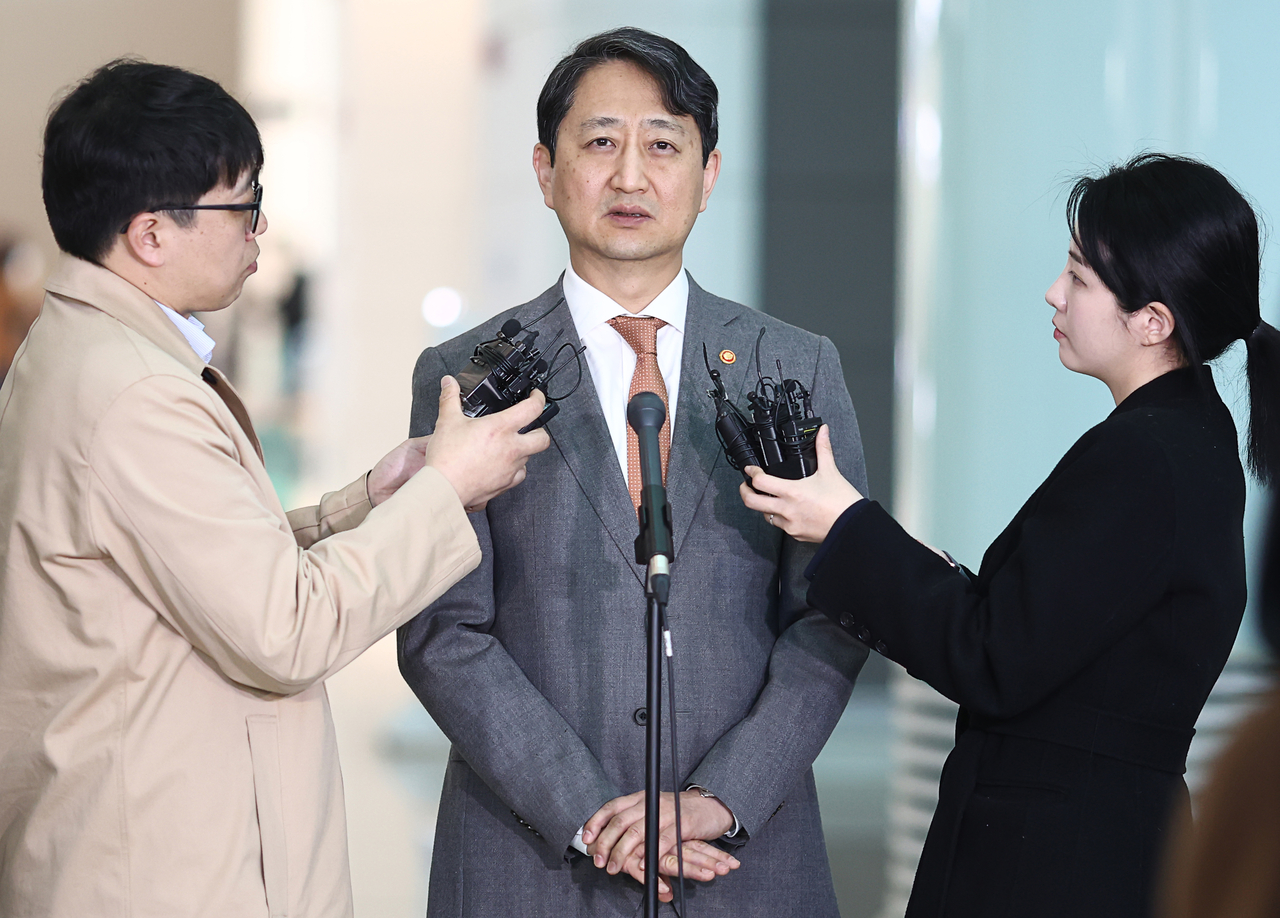
Industry Minister Ahn Duk-geun made the remarks as he departed for Washington on a two-day trip to meet US officials, including Secretary of Energy Chris Wright and Secretary of Commerce Howard Lutnick, among others.
"We will look for various alternatives, including getting an exclusion from the DOE list, to prevent the issue from negatively affecting local industries and technological cooperation (between South Korea and the US)," Ahn said.
His trip comes amid concerns that the DOE's listing of South Korea on its "sensitive and other designated countries list" may lead to possible new restrictions on scientific and technological cooperation between the two countries. It also comes only three weeks after his last trip to the US.
"The industry ministry understands the inclusion was made due to technical security issues as the foreign ministry said earlier," Ahn said, noting he plans to address the US administration's concerns on such issues during his planned meeting with Wright.
The two sides will also discuss bolstering bilateral cooperation in energy, such as nuclear power plants, small modular reactors and gas, he added.
On his planned meeting with Alaska Gov. Mike Dunleavy next week, Ahn said he will discuss the Alaskan government's plan for the gas pipeline project to assess the economic feasibility of the plan and what role Korean companies can play, if they decide to take part.
"We can see the US administration has quite a firm stance on tariffs ... so if we can get an exemption, we would, but in case we can't, the government will keep negotiating with the US to minimize the negative impact on Korean industries," he said.
On the US Treasury Secretary Scott Bessent's recent remarks on "Dirty-15" countries with high tariffs on US goods, Ahn said it is still "unclear" whether South Korea is on the list.
"There is practically zero tariff on US imports under our bilateral free trade agreement, but there are some non-tariff barrier issues the US has raised, and government agencies have been working together to address the issues," Ahn said.
In a recent meeting with South Korea's trade minister, US Trade Representative Jamieson Greer reportedly brought up Seoul's sanitary and phytosanitary measures on US agricultural products, restrictions on South Korea's geographic data for Google Maps and digital regulations, raising concerns the US may view such issues as non-tariff barriers and use them to pressure South Korea.
"Since the current situation is not something that can be resolved instantly, we are working to build credibility with the US and create the most favorable environment for local industries whenever Washington announces new policies or makes changes to its tariff plan," Ahn explained. (Yonhap)