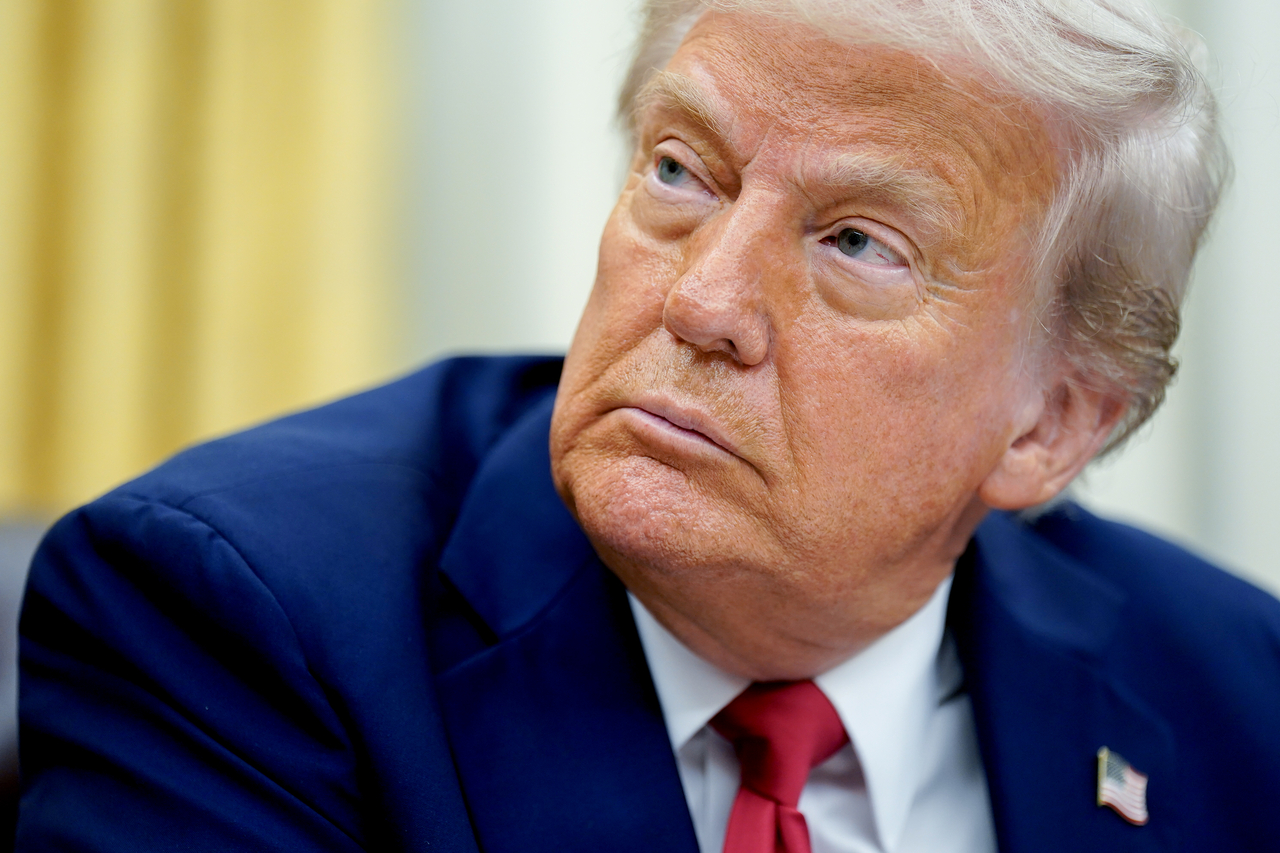
US President Donald Trump is set to announce "reciprocal" tariffs this week to match what other countries levy on American exports, as South Korea and other US trading partners are striving to minimize the potential repercussions of the new duties.
Trump is expected to unveil reciprocal tariffs at a White House event at 4 p.m. on Wednesday (Washington time), the day that he has dubbed as "Liberation Day" -- a culmination of his drive to reduce America's trade deficits and boost domestic manufacturing. They will take effect "immediately," the White House said.
The upcoming tariffs would mean the expansion of Trump's trade war on a global scale given that the tariff fight has so far affected some countries, including China, Canada and Mexico, as well as several product targets, such as steel and aluminum.
In the lead-up to the long-awaited announcement, media speculation swirled that the Trump administration had been weighing several options, including a 20 percent blanket tariff on all imports -- one that White House press secretary Karoline Leavitt did not confirm Tuesday.
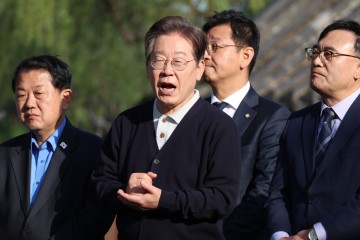
South Korea has been anxiously awaiting the tariff announcement as it could become a target for Trump's tariff pressure given that the US goods trade deficit with South Korea was tallied at US$66 billion last year, a nearly 30 percent rise from the previous year, according to the Office of the US Trade Representative.
The Asian ally's concerns further deepened amid a sense that it could be part of the "Dirty 15" group -- a term that Treasury Secretary Scott Bessent used to refer to the 15 percent of trading partners that comprise a large part of America's trade volume while having high trade barriers on US exports.
Reciprocal tariffs have originated from Trump's deep-seated perception that America has been "ripped off" by many countries, "both friend and foe alike," as well as his desire to reshape the global trading system in favor of American interests.
"We've been ripped off by every country in the world, friend and foe. We've been ripped off on trade. We've been ripped off on military," he said during a press availability on March 21.
"We protect people, and they don't do anything for us. It's just so unfair for years and years. Now some of that money is going to be coming back to us in the form of tariffs," he added.
The new tariffs are to be put into place after Trump signed a presidential memorandum on the "fair" and "reciprocal" plan on Feb. 13, tasking Commerce Secretary Howard Lutnick and USTR Jamieson Greer to submit a report with proposed trade remedies on a country-by-country basis.
When the memo was signed, his aides said that reciprocal tariffs will be customized based on trading partners' tariff- and non-tariff barriers as well as other factors, such as countries' exchange rate-related policies and practices.
Just two days before the reciprocal tariff rollout, USTR released an annual report on foreign trade barriers that listed South Korea's "offset" defense trade policy, emission-related regulations on imported cars, pricing policies for pharmaceuticals and age-based restrictions on US beef imports, to name a few.
For the first time, the report mentioned Korea's defense offset trade program under which Seoul has set certain conditions for foreign defense contractors to meet for defense industrial cooperation when they engage in key government procurement projects.
The tariff drive comes as the Trump administration seeks to reset the "baseline" of global trade in America's favor based on its belief that the current state of global trade is "unfair" to the US
"Countries that want to (negotiate) can negotiate with us on a one-on-one bilateral basis to see if we can come up with trade deals with them that are fair to both sides," he said during a Fox News Radio interview last month. "But we have to negotiate from a new status quo. We can't negotiate from the existing status quo, which is completely (unfair)."
In addition to the reciprocal tariffs, the Trump administration plans to start collecting 25 percent tariffs on imported cars and auto parts on Thursday -- another levy bound to affect the South Korean industry. The Trump administration has already begun imposing 25 percent tariffs on steel and aluminum imports since last month.
Seoul has been cranking up diplomatic efforts to mitigate the impact from new US tariffs amid concerns that a period of political uncertainty, caused by President Yoon Suk Yeol's short-lived martial law imposition and his subsequent impeachment in December, would affect policy coordination between Seoul and Washington. (Yonhap)