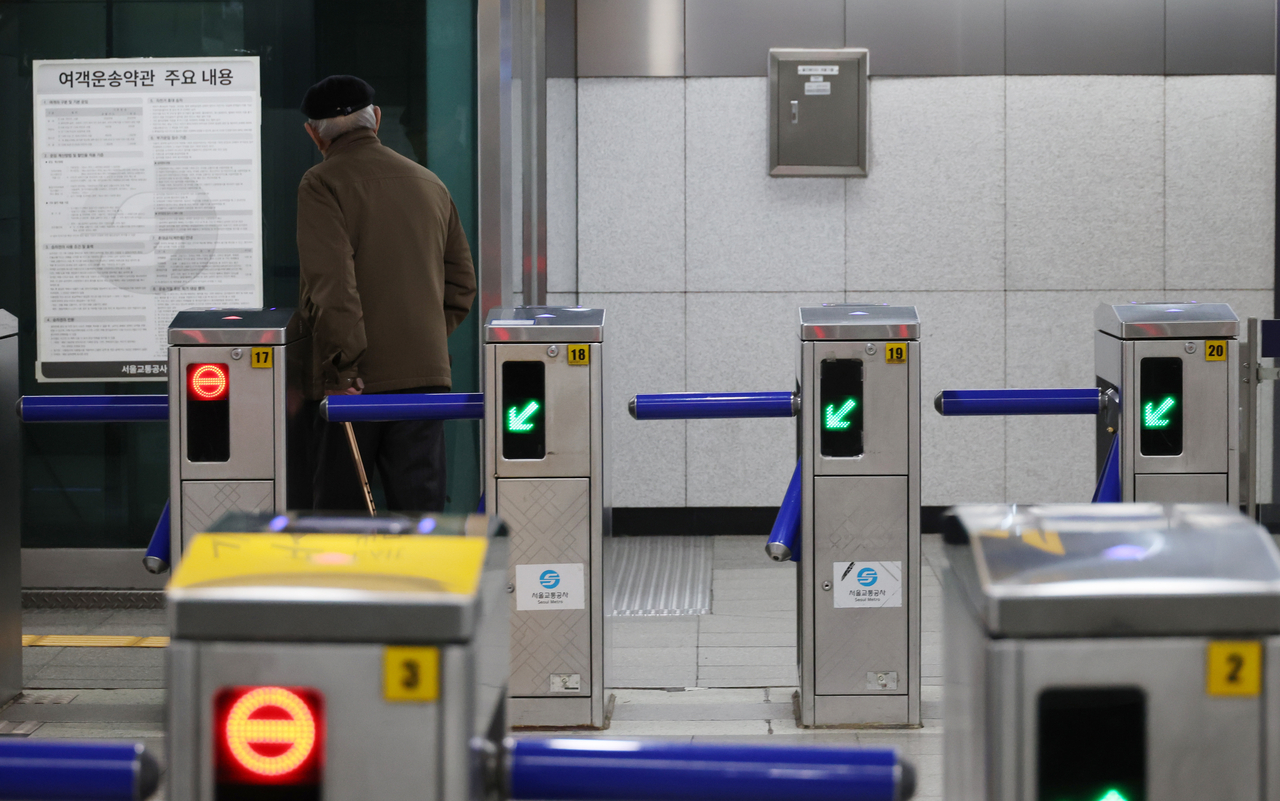
The basic fare for subways in the greater Seoul area will increase by 150 won ($0.11) one way in June, from the current 1,400 won to 1,550 won, marking the first fare hike in 18 months.
The move follows the recent approval by the Gyeonggi Provincial Council of a proposal to adjust urban rail fares, following a delay due to inflation and political considerations.
Due to the political sensitivity of public utility price hikes, the fare increase is likely to take effect after the June 3 presidential election in the end of June.
Originally planned for March, the fare adjustment had been postponed due to inflation concerns and political considerations, raising speculation that it might be delayed to the second half of the year. However, Seoul City determined that further delay was unsustainable, citing the deepening deficit of the Seoul Metro, the city’s subway operator.
After increasing the subway fare from the original 1,250 won to 1,400 won in October 2023, the city has constantly notified an additional increase in 2024.
Seoul Metro's accumulated deficit has nearly reached 19 trillion won. As of the end of 2023, the company reported an annual net loss of 724.1 billion won, up 40 percent from the previous year.
Its debt stands at 7.3 trillion won, with daily interest payments exceeding 300 million won. The growing gap between rising operating costs — particularly electricity prices —and stagnant fares has exacerbated the problem.
The Seoul city government argues that the fare hike is a necessary but insufficient step toward addressing the structural deficit. Seoul officials have repeatedly called for the central government to provide subsidies for the cost of free rides offered to groups under national policy mandates: people aged 65 and older, persons of national merit, individuals with disabilities and children aged 6 or younger.
The city argues that the policy of offering free subway rides to nationally mandated groups is a matter of national interest, having been introduced under a presidential directive and applied to all regardless of where they live, therefore eligible to be compensated by the central government as a public service obligation.
PSO compensation is given to private organizations for providing mandated services in the public interest. Korail receives PSO compensation to cover approximately 70 percent of free transportation services.
The central government, however, maintains that local subway operations are a municipal responsibility and not eligible for PSO compensation.
During a recent public forum, Seoul Metro officials revealed that seniors and other groups eligible to ride for free accounted for approximately 17 percent of daily passengers in 2024 — around 7.51 million people — leading to estimated annual losses of 400 billion won. “Without a financial solution, the growing burden of fare exemptions could lead to structural deficits and force delays in safety investments,” the operator warned.
As the fare hike proceeds, the debate over fiscal responsibility for free transportation continues to loom large, raising questions about the long-term sustainability of the capital’s subway services.
jychoi@heraldcorp.com