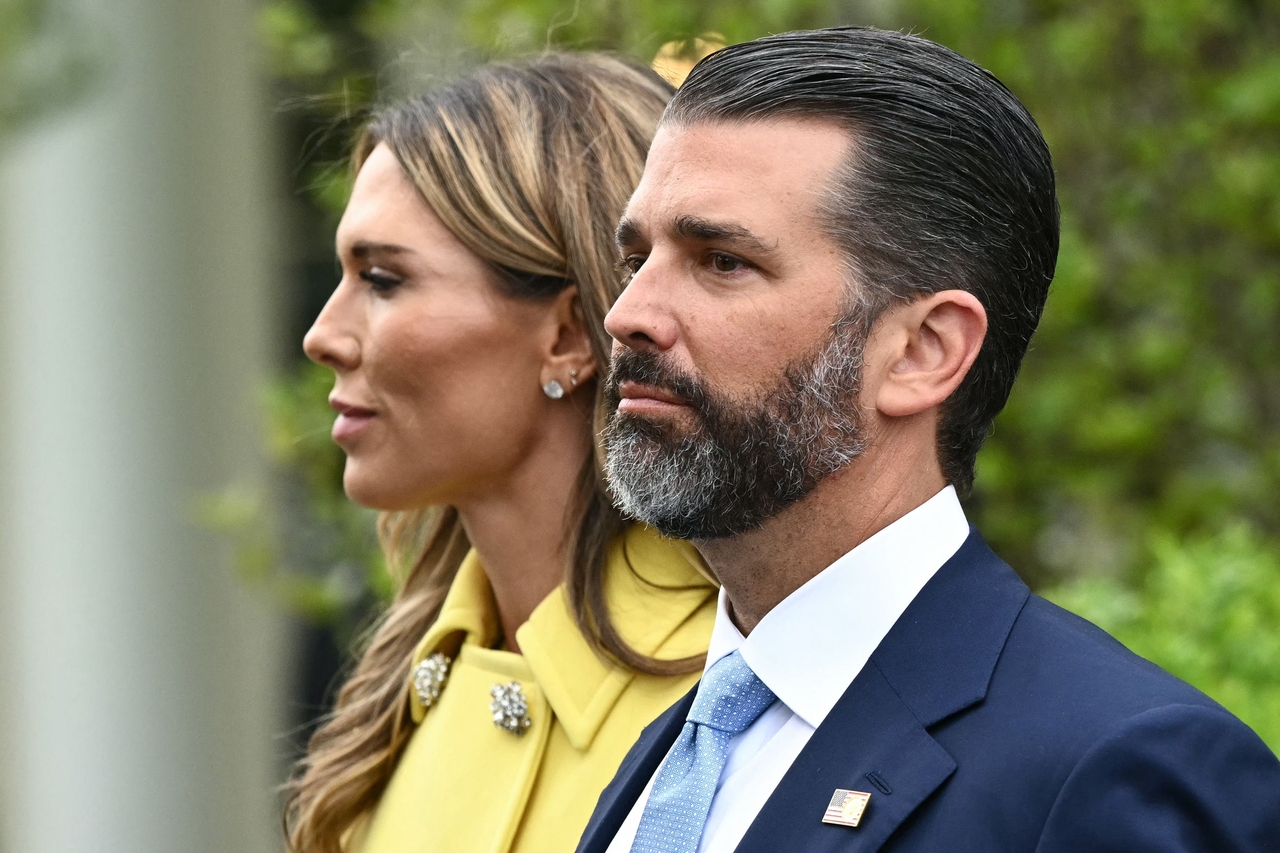
Donald Trump Jr., the eldest son of US President Donald Trump, arrived in Seoul on Tuesday for a meeting with around 20 business leaders from South Korean conglomerates, industry sources said.
The two-day trip by Trump Jr., his first to South Korea since his father's inauguration in January, comes at the invitation of Shinsegae Group Chairman Chung Yong-jin.
Per sources, Trump Jr. arrived at Gimpo International Airport, western Seoul, in his private jet at around 6:25 p.m. Tuesday. It had been scheduled to touch down at 4:45 p.m. but there had been a slight delay before the departure.
Wearing a black cap and a long-sleeve shirt, Trump Jr. left the airport without speaking to the dozens of waiting South Korean reporters.
South Korean business circles asked Chung to facilitate Trump Jr.'s visit as a way to establish contact with the Trump administration, according to the sources.
Business leaders from the semiconductor, automobile, energy, steelmaking and defense industries have reportedly expressed interest in holding one-on-one meetings with him.
On Wednesday, Trump Jr. is expected to have separate meetings with about 20 heads of the country's major conglomerates in Seoul.
For companies that export to the US and seek a reliable communication channel with Washington, these meetings offer a rare opportunity to connect directly with a figure closely tied to President Trump, the sources said.
Trump Jr. reportedly does not have any scheduled public meetings with South Korean politicians or government officials during his two-day stay.
Chung and Trump Jr. are known to be close.
In December, Trump Jr. invited the Shinsegae chairman to his father's Mar-a-Lago resort in Florida, which led to a meeting between Chung and then President-elect Trump.
The Trump administration began imposing "reciprocal tariffs," including 25 percent duties on South Korea, on April 9, only to announce a 90-day pause shortly afterward.
In recent high-profile trade talks, Seoul and Washington agreed to pursue a comprehensive package agreement by July 8, when the 90-day tariff pause is set to expire. (Yonhap)