From US tariffs to supplementary budget, key policy agenda at risk as finance minister exits in political turmoil
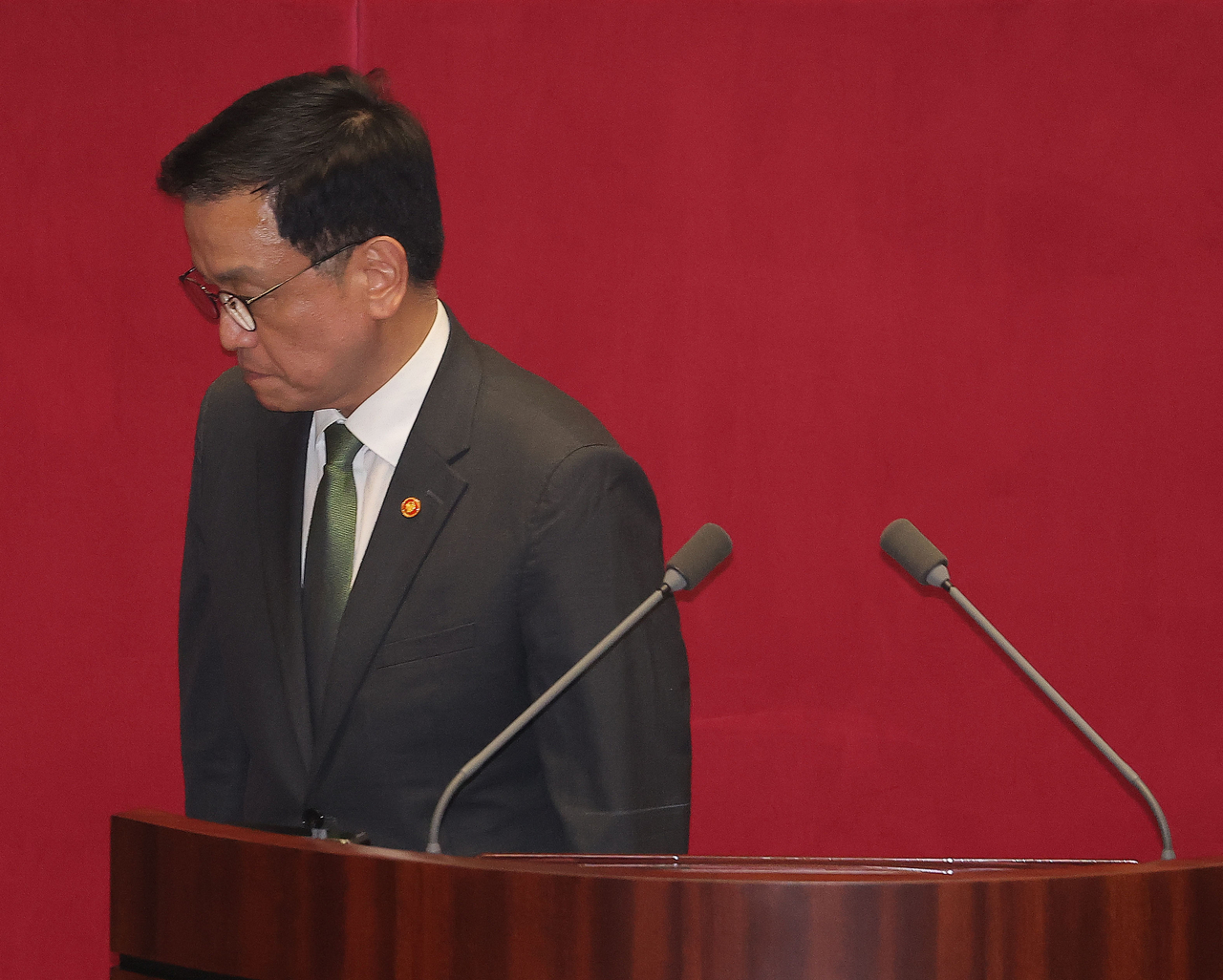
South Korea faces heightened economic uncertainty after Finance Minister Choi Sang-mok’s abrupt resignation late Thursday, disrupting key policy initiatives that include imminent US tariff negotiations.
Choi resigned Thursday night shortly after the main opposition Democratic Party of Korea filed his impeachment motion, with acting President Han Duck-soo — who had himself already announced his own resignation earlier in the day to be effective at midnight — accepting the resignation soon after.
Choi's departure creates a major leadership vacuum, as he had been set to replace Han as acting president on Friday. Han resigned to launch a bid to formally drop "acting" from the title, ahead of the early June 3 presidential election.
With both leaders gone, Education Minister Lee Ju-ho, third in line for national leadership, is serving as acting president until a new administration takes shape next month.
First Vice Finance Minister Kim Beom-seok has assumed the role of acting finance minister, while concurrently serving as deputy prime minister for the economy. In place of Choi, Kim led a meeting with heads of major economic agencies and gathered senior Finance Ministry officials on Friday to address the crisis.
“All efforts should focus on safeguarding Korea’s external credibility and minimizing the impact of tariff shocks, while ensuring prompt implementation of the supplementary budget to address urgent issues,” he said during the ministry meeting, pledging to operate an emergency response system to ensure market stability.
US tariff negotiations
Choi's resignation casts a shadow over Korea’s high-stakes trade negotiations with the US.
Choi and Trade Minister Ahn Duk-geun met last month in Washington with their US Treasury and Trade Representative counterparts for a “2+2” dialogue — a high-level format to address rising tariff tensions. Both sides agreed to continue working-level talks to finalize a “July Package” by July 8, the expiration of a 90-day US tariff grace period.
Ahn and US Trade Representative Jamieson Greer are set to meet next during the May 15-16 Asia-Pacific Economic Cooperation trade ministers' summit on Jeju Island.
While Choi’s sudden departure raises concerns about Seoul’s leadership in the talks, the Korean government stated that the "2+2" discussions will remain largely unaffected.
“The first meeting, where top finance and trade officials from the US and Korea attended, was exceptional, made possible by the coincidence of Choi and Ahn being in Washington at the same time,” an official from the Finance Ministry told The Korea Herald, adding that a follow-up ministerial-level meeting involving Choi had not been planned.
“As the framework for future talks was established then, each ministry will continue negotiations with their counterparts at the working level,” the official said.
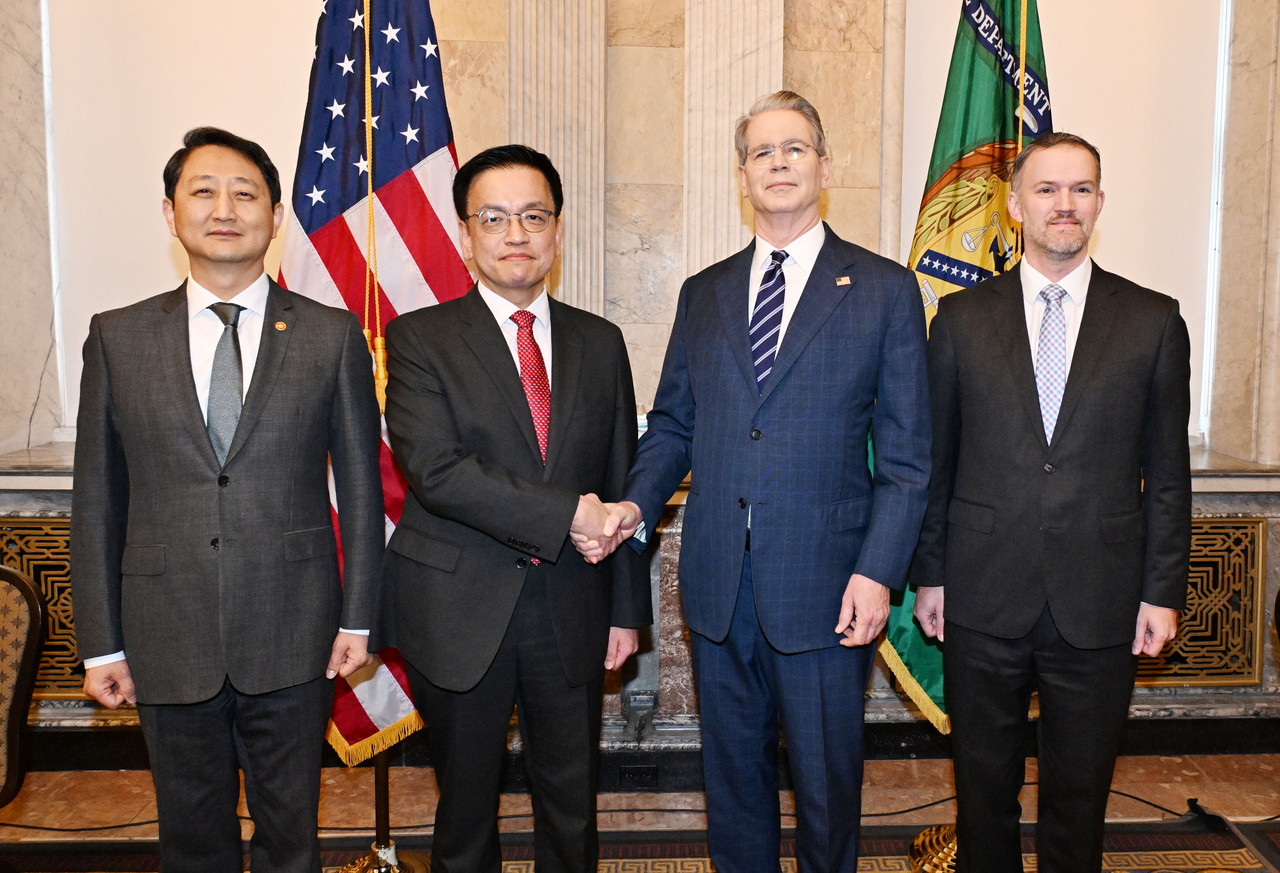
Meanwhile, Korea's Trade Ministry is moving forward with technical-level talks. On Thursday, Trade Policy Director General Chang Sung-gil met with US officials in Washington. While no outcome was disclosed, reports suggest the meeting aimed to set the stage for formal negotiations.
The dual-track talks also included discussions between Korea’s Finance Ministry and the US Treasury on currency policies, but the ministry stated that these matters were confidential.
Exports are starting to feel the pressure. Outbound shipments to the US fell 3.7 percent in April, despite overall export growth, government data shows. The Export-Import Bank of Korea reported a 2.1 percent on-year drop in first-quarter exports, adding that the real impact will hit in the second quarter, with exports expected to fall 6-7 percent.
$18b Czech nuclear deal
Korea's landmark nuclear export deal with the Czech Republic is also being overshadowed, with leadership turmoil occurring just days before its expected signing.
On Wednesday, a Korean consortium led by Korea Hydro & Nuclear Power is set to finalize an $18 billion deal with Prague to build two nuclear reactors in Dukovany, southern Czech Republic. The project would mark Korea’s first nuclear reactor export in 16 years and its debut in Europe’s atomic market.
The sudden resignation of Choi, who had been expected to attend the signing as acting president, has left the composition of Korea’s delegation in question. His participation had been anticipated, following the precedent set by former President Yoon Suk Yeol’s visit to Prague in September after KHNP was named the preferred bidder for the Dukovany project.
Leadership for the strategic export push now falls to acting President Lee, who may join the delegation in Choi’s place. Trade Minister Ahn and KHNP CEO Whang Joo-ho are confirmed to attend.
Reports suggest the presence — or absence — of Korea’s top leadership could affect not only the final terms of the Dukovany deal, but also Seoul’s chances of securing future contracts, including the right of first offer for another reactor project in Temelin, in the Czech Republic's South Bohemian region.
Execution of extra budget
The 13.8 trillion won ($9.8 billion) supplementary budget for disaster response and economic revitalization cannot afford delays amid the ongoing political turmoil.
The National Assembly approved the extra budget Thursday, adding 1.6 trillion won to the government’s original 12.2 trillion won proposal. This marks the first supplementary budget passed this year and is seen as crucial to stimulating the slowing economy.
“The supplementary budget hinges on speed more than anything,” acting President Lee Ju-ho said during his first Cabinet meeting Friday.
The funds will be allocated across three major sectors: over 3 trillion won for disaster recovery, including reconstruction in North Gyeongsang Province following March’s deadly wildfire; about 4.5 trillion won for trade and artificial intelligence-related initiatives, including measures to buffer the impact of US tariff shocks; and more than 5 trillion won for the broader support of livelihoods and economic stability amid inflation and sluggish growth.
Meanwhile, Korea's growth has stalled, weighed down by external and internal risks, with gross domestic product contracting 0.2 percent in the first quarter this year from the prior quarter, with a 1 percent expansion forecast for the year.
jwc@heraldcorp.com