South Korea has unprecedented ‘acting acting acting president' just a month ahead of early election
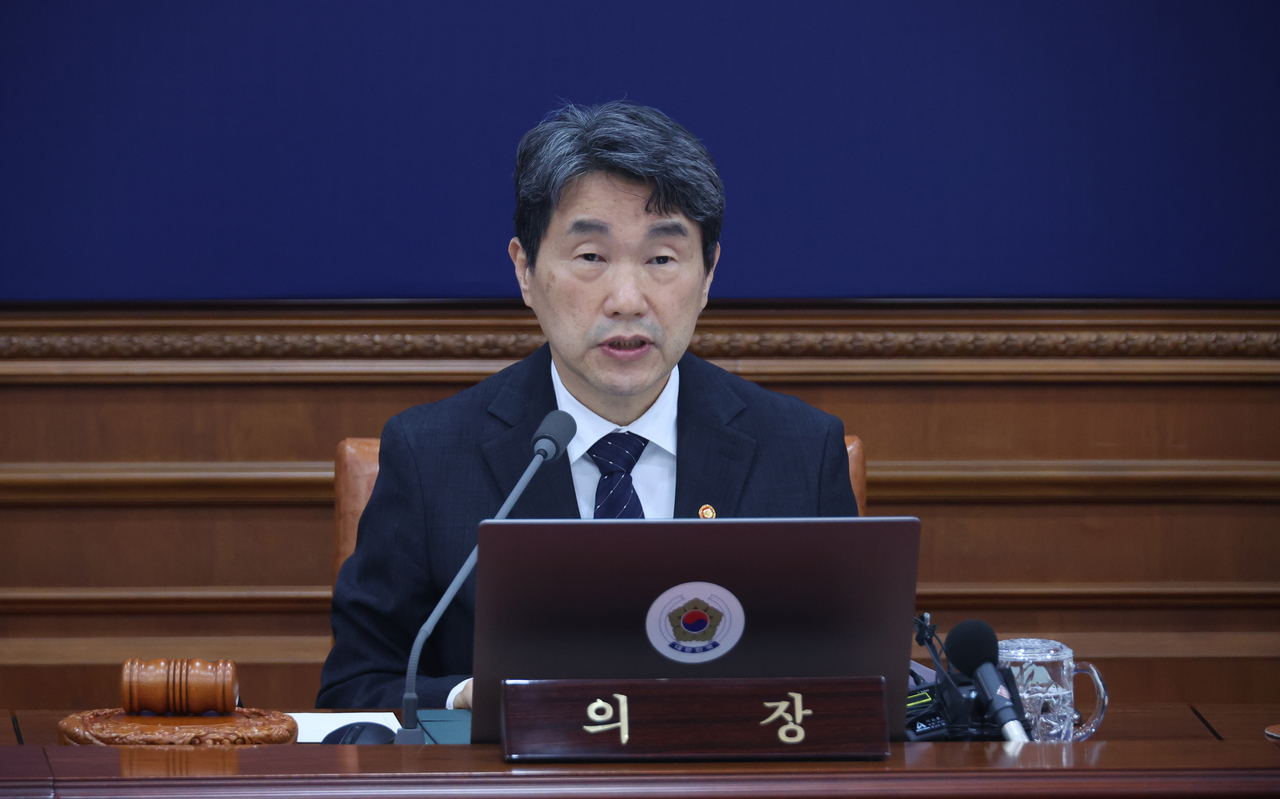
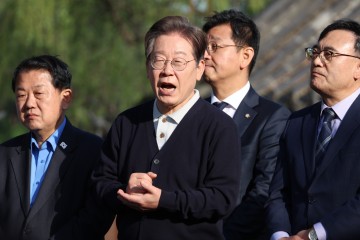
Education Minister Lee Ju-ho, the deputy prime minister who is now acting prime minister and acting president, on Friday pledged to ensure a fair presidential election and maintain firm national security, as South Korea grapples with yet another transfer of leadership just a month before a snap presidential vote.
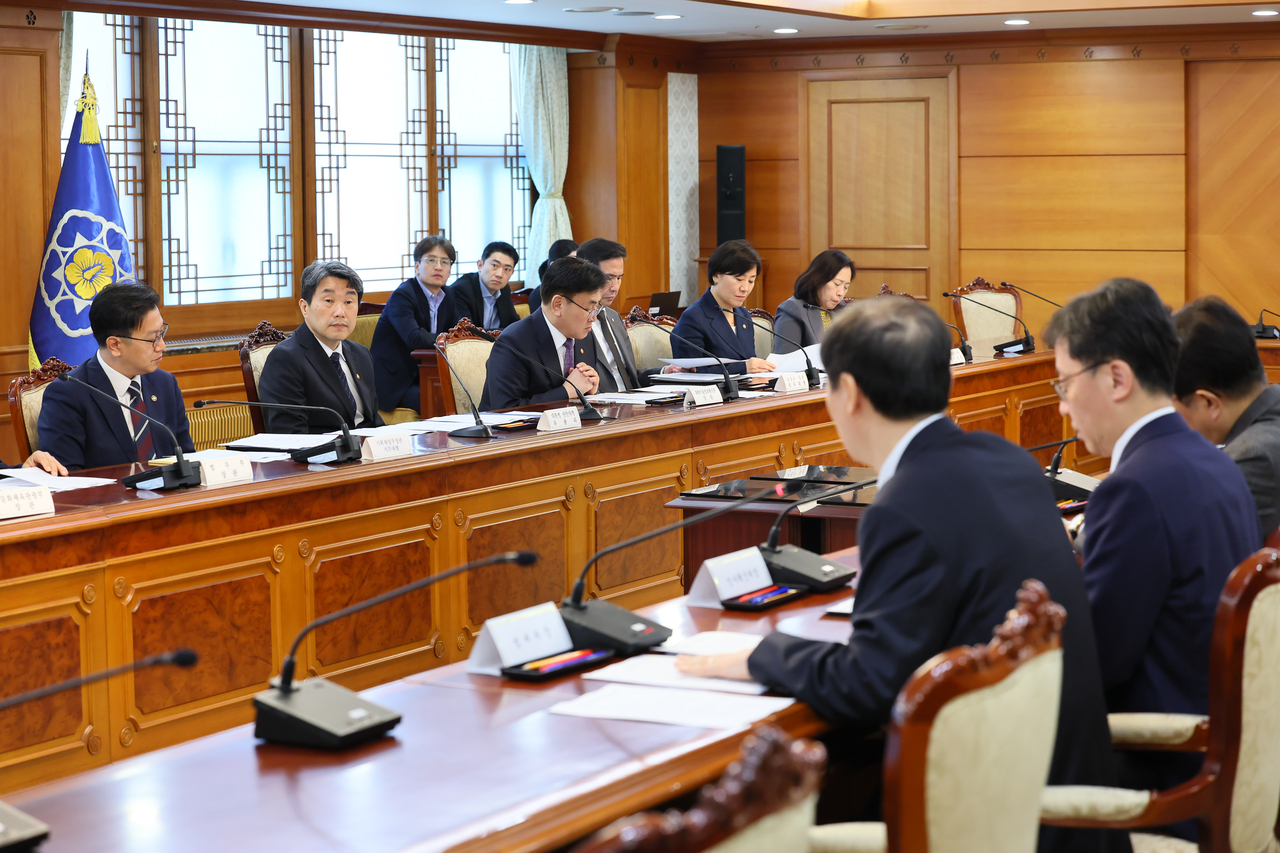
Lee presided over the extraordinary Cabinet meeting on his first day as acting president at the government complex in Seoul, taking the helm of South Korea’s unprecedented interim government — a situation being dubbed the “acting acting acting president” administration.
Lee, fourth in the Cabinet’s hierarchy, abruptly became acting president as of Friday midnight following the concurrent resignations of former acting president and Prime Minister Han Duck-soo and former deputy prime minister for economic affairs and Finance Minister Choi Sang-mok, who was third in the state hierarchy, Thursday.
Lee now serves as acting prime minister in addition to his original roles as deputy prime minister for social affairs and education minister.
“Above all, the Cabinet and I must, in accordance with the constitutional duties entrusted to us, firmly safeguard national security and the safety of the people, and provide thorough support so that the entire process of electing a new president can be managed transparently,” Lee said during the Cabinet meeting, following a prior closed-door discussion with the remaining members of the Cabinet.
"With the mindset that each of us is an acting president, we must give our utmost over the remaining 30 or so days to diligently manage state affairs."
Lee is taked with overseeing South Korea’s interim government for the next 33 days until the inauguration of a new government immediately after the vote becomes clear in the presidential election on June 3, without a transition period.
“Although there is little time left, there are extremely important tasks before us for the sake of the national interest and the people,” Lee said. “We must not neglect any of them — from full-fledged trade negotiations with the US, to reviving the struggling livelihood economy, to the global technological hegemony competition over semiconductors and AI.”
Han, Choi, Han, Lee: acting presidency shifts
Lee's interim leadership comes as South Korea’s leadership has been in turmoil following the concurrent resignations of Han and Choi, exacerbating the leadership void since impeached former President Yoon Suk Yeol’s illegitimate declaration of martial law on Dec. 3, 2024.
In his last moments as acting president, Han accepted the resignation of Choi just minutes before the National Assembly was set to vote on a motion to impeach him Thursday night. Earlier in the day, Han had already announced his resignation from the post to be effective at midnight, with the intention to launch his presidential bid on Friday. That was 38 days after Han was restored as acting president for his second stint.
Han was reinstated as acting president on March 27, the day the Constitutional Court dismissed the Assembly’s impeachment motion against him. Han's return to office came 87 days after he was suspended from his duties as acting president under the Assembly’s impeachment bill passed on Dec. 27 last year. He had served as acting president since Yoon was impeached on Dec. 14. Choi assumed the acting presidency upon Han's suspension.
Speaking to reporters on his way into the Government Complex Seoul on Friday morning, Lee said he would do his best to ensure the “stable management of state affairs,” explaining that “state affairs are managed through a system."
“I will place particular emphasis on ensuring fair election management, with the presidential election just around a month away," Lee told reporters.
Lee responded to concerns over a potential vacuum in the fields of diplomacy, security and trade, pledging “sufficient communication with the National Assembly and close consultations with Cabinet members.”
Not even 'slightest lapse' in diplomacy, security
Lee began his acting presidency by sending an emergency directive to all ministries and public officials.
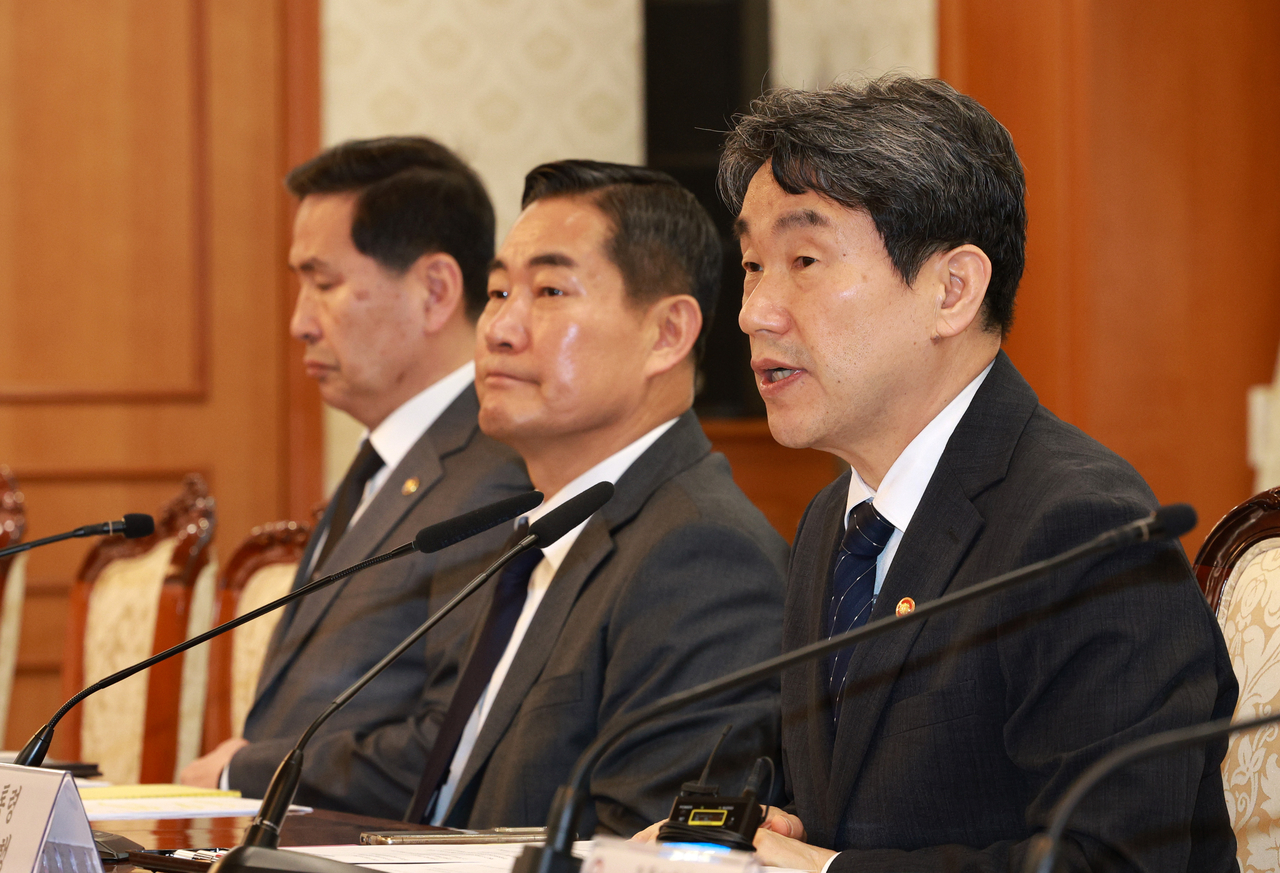
Lee also convened an emergency meeting of the National Security Council on Friday morning before the Cabinet meeting, emphasizing that "there must not be the slightest lapse across any domain — whether diplomacy, security, defense or economic security."
“In particular, I have called for maintaining a watertight readiness posture to ensure that North Korea cannot plot any kind of provocative maneuver," Lee said.
“We are at a juncture when the NSC must redouble its efforts to safeguard both the safety of the country and the security of the territory, ensuring that the public does not harbor even the slightest anxiety over national security."
Lee also asked each ministry and government agency as well as overseas diplomatic missions to “devote themselves to meticulous crisis management as well as active execution of duties.”
“Furthermore, I want to underscore that close communication and cooperation among the diplomatic and security ministries are more important now than ever before,” Lee said. “I once again request all ministries and agencies to exert their utmost efforts until the very end for the nation and the people and above all to prioritize the national interest under the spirit of becoming ‘one team.'"
dagyumji@heraldcorp.com